The competition courses for this winter’s FIS Nordic World Ski Championships in Falun are now ready. Both athletes and spectators will find plenty of familiar features.
— We have made the courses even more spectator-friendly, says Tobias Söderberg Jönsson, Head of Sport at Falun 2027.
Ahead of the 2015 World Championships in Falun, a number of changes were made to the competition courses at Lugnet. One of the architects behind those changes was Tobias Söderberg Jönsson, who was the course manager at the time.
— We wanted to create a tougher finish and make sure the decisive moments would take place inside the stadium. That was when we built the sprint climbs that we now use as the finish for all our races. It really took the courses to another level, making them both tougher and more spectator-friendly, says Söderberg Jönsson, who is now Head of Sport at Falun 2027.
The courses for this winter’s World Championships in Falun are now ready.
— They will be courses that both athletes and spectators will recognise. The only major change is the approach to the new bridge that has been built in the Lugnet area. We have also compressed the courses even further than we did in 2015, making them even better for both TV viewers and spectators at the venue. In the relay races, for example, the athletes will pass through the stadium no fewer than nine times – for the start, lap counting, exchanges and the finish, says Söderberg Jönsson.
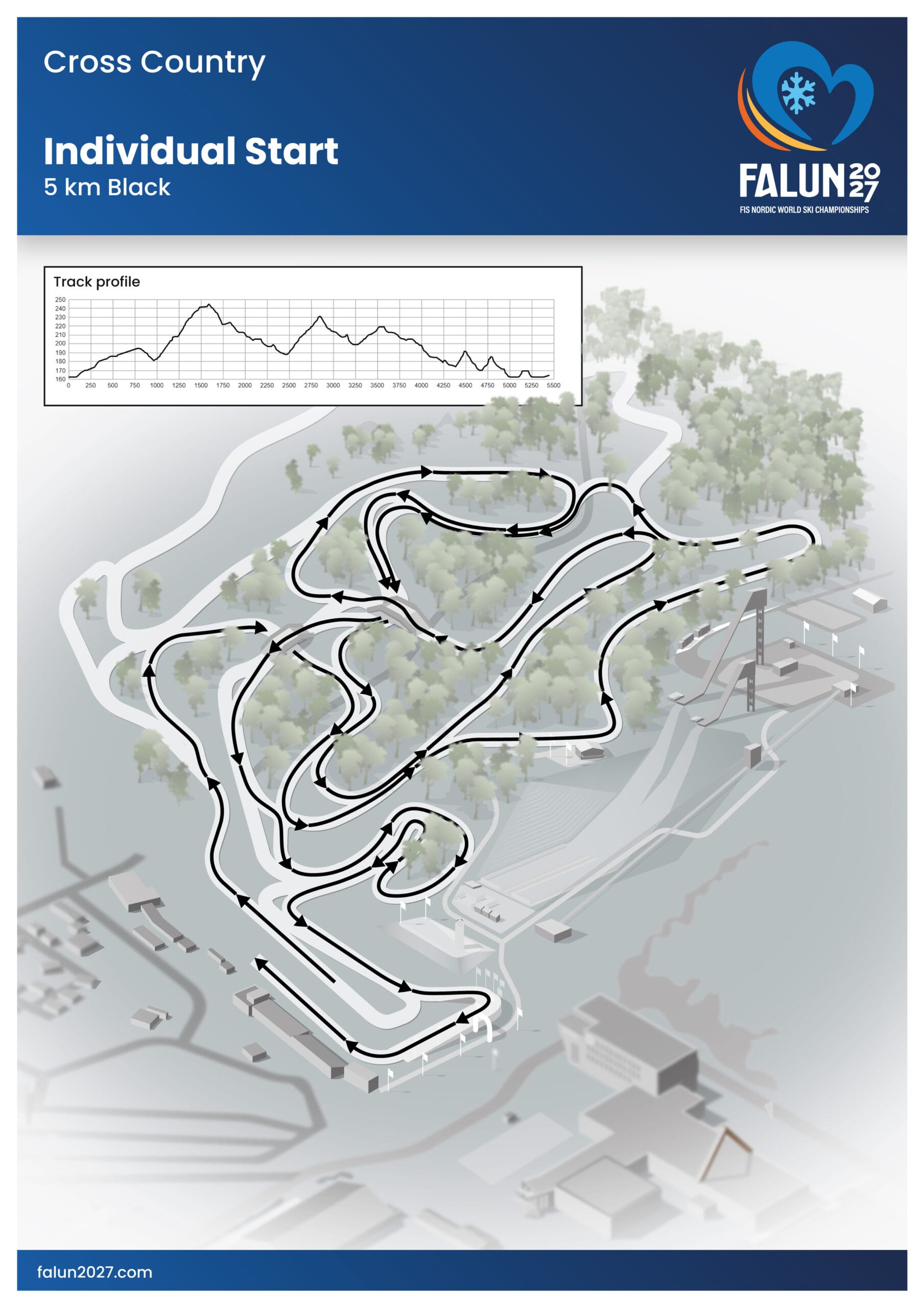
In addition to the sprint course, which has been used in Falun since the 2015 World Championships, the cross-country skiers will race on three different loops – red, blue and black. The black loop is a combination of the red and blue loops and will only be used in the individual 10-kilometre race on 2 March.
All mass-start races will finish on the blue loop, where the athletes will tackle the entire Mördarbacken climb, the sprint climbs and finally the horseshoe section inside the stadium.
— The fact that only the blue loop runs across the horseshoe inside the stadium means that the athletes can use the full width of the horseshoe. This makes the competition even fairer and also creates perfect conditions for sprint finishes, says Söderberg Jönsson.
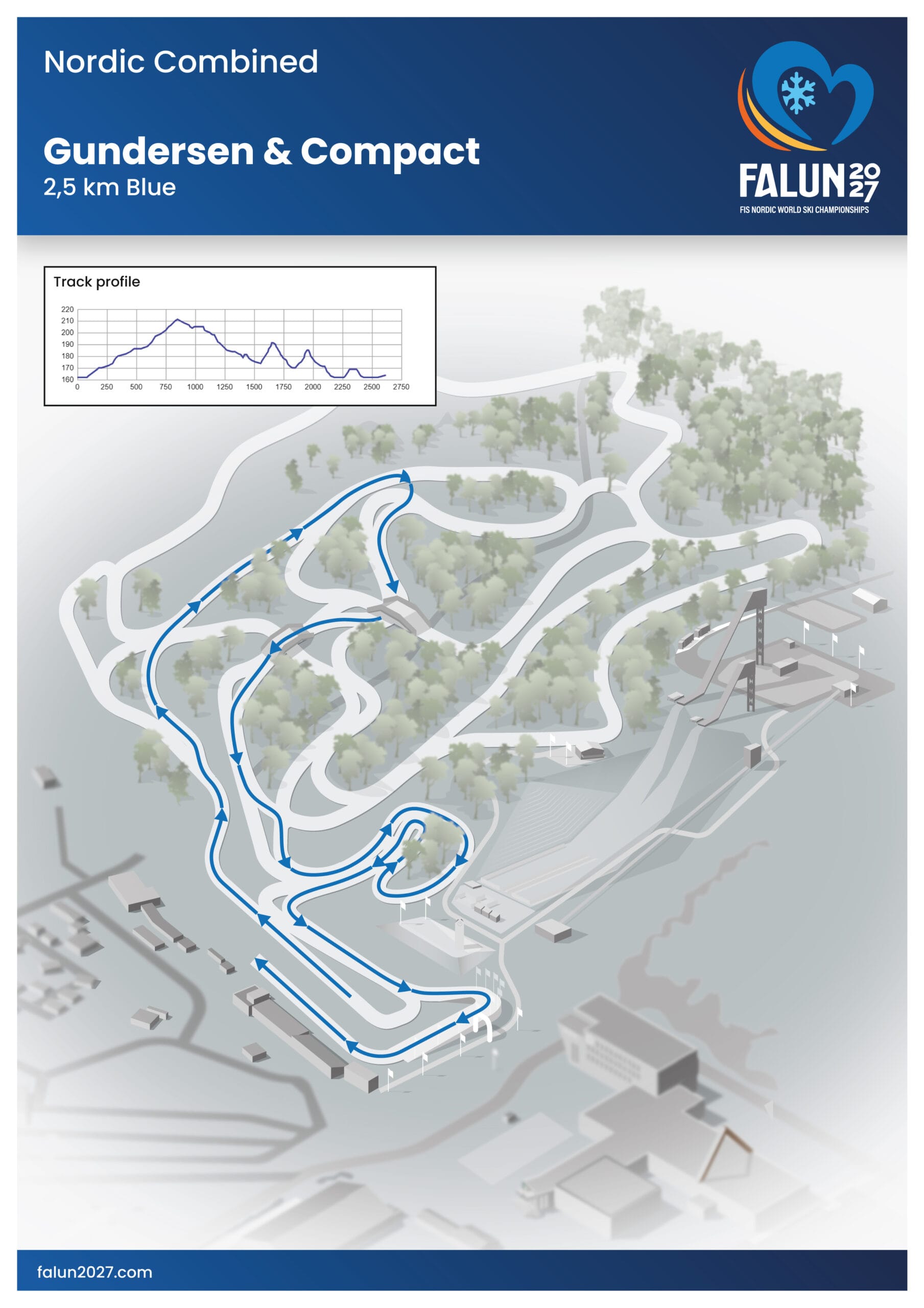
For the Nordic combined athletes, completely new competition courses await at Lugnet. They will race on a 2.5-kilometre loop (blue) in the longer events and a 1.5-kilometre loop in the team sprint.
— They will ski on a loop up to the Dalahusstugan, then descend through the sprint climbs and return to the stadium for the next lap. In the sprint course, they will use a course that is largely identical to the cross-country sprint course, but with a slightly longer loop before entering the sprint climbs.
The competition courses
Cross-country skiing
- Men’s/women’s qualification race, 7.5 km individual start, classic technique = 3.75 km red + 3.75 km blue
- Men’s/women’s sprint, freestyle = 1.3 km green
- Men’s/women’s team sprint, classic technique = 1.3 km green
- Men’s/women’s skiathlon, 20 km = 3 × 3.3 km red, classic technique + 2 × 5 km blue, freestyle
- Men’s/women’s individual start, 10 km, classic technique = 2 × 5 km black
- Men’s/women’s relay, 4 × 7.5 km = 3.75 km red, classic technique + 3.75 km blue, freestyle
- Men’s/women’s mass start, 50 km, freestyle = 3.3 km red + 5 km blue
Nordic combined
- Men’s/women’s individual Gundersen, 10 km/5 km, freestyle = 2.5 km blue
- Men’s individual Compact, 7.5 km, freestyle = 2.5 km blue
- Mixed team, men/women, 2 × 5.0 km/2 × 2.5 km, freestyle = 2.5 km blue
- Men’s/women’s team sprint, 2 × 7.5 km/2 × 4.5 km, freestyle = 1.5 km green